



Community Fitness Equipment and Its Importance
Community fitness equipment plays an important role in promoting public health and encouraging active lifestyles. In many cities and residential neighborhoods, outdoor fitness equipment has become a common feature in parks, community squares, and public recreational areas. These facilities provide convenient and free opportunities for people of all ages to exercise, helping improve physical health, strengthen social connections, and enhance the overall quality of life within a community.
One of the most significant advantages of community fitness equipment is accessibility. Unlike gyms that require membership fees, community fitness equipment is usually free for the public to use. This makes exercise more accessible to people from different economic backgrounds. Residents can easily visit nearby parks or community spaces to work out without the need for expensive equipment or facilities. For many people, especially the elderly and children, having fitness equipment close to home encourages them to participate in regular physical activity.
Another important benefit is promoting regular exercise and healthy lifestyles. Modern life often involves long hours of sitting at desks, using computers, or watching screens, which can lead to a lack of physical activity. Community fitness equipment encourages residents to spend more time outdoors and engage in physical exercise. Simple activities such as stretching, walking, or using exercise machines can help improve cardiovascular health, strengthen muscles, and enhance flexibility. Regular exercise also helps reduce the risk of chronic diseases such as obesity, heart disease, and diabetes.
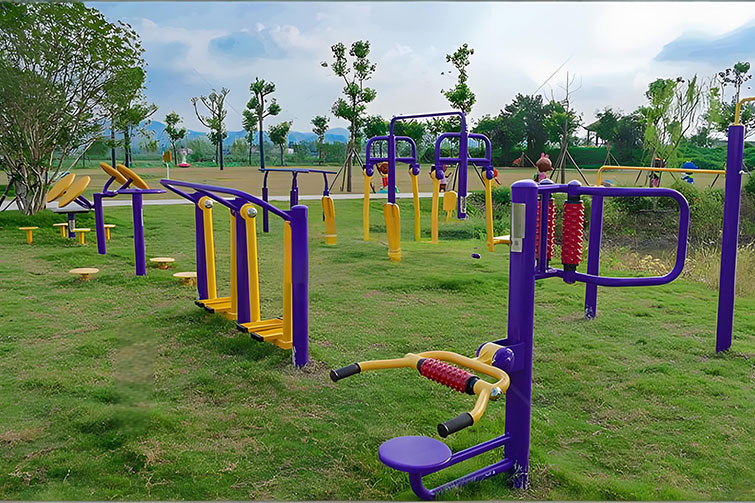
Community fitness equipment is usually designed to serve different age groups and fitness levels. Many outdoor fitness parks include equipment such as pull-up bars, elliptical trainers, waist twisters, rowing machines, and step machines. Some equipment focuses on strengthening upper body muscles, while others improve leg strength, balance, or flexibility. For older adults, low-impact equipment helps maintain mobility and joint health. For younger people, more challenging equipment provides opportunities to build strength and endurance.
Safety and durability are also important considerations in the design of community fitness equipment. Since these facilities are used by a large number of people every day, they must be constructed from strong and durable materials such as galvanized steel or stainless steel. The surfaces are usually coated with weather-resistant paint to prevent rust and corrosion. In addition, the equipment should have smooth edges, stable structures, and anti-slip features to reduce the risk of injury. Clear instruction signs are often installed to guide users on how to use the equipment properly.
Another key aspect of community fitness equipment is its role in encouraging social interaction. When people exercise in public spaces, they often meet neighbors, friends, or other community members. This creates opportunities for communication and social bonding. Group exercise activities, such as stretching sessions or morning workouts, can help build a stronger sense of community and improve mental well-being. For elderly residents in particular, these public spaces provide valuable opportunities to stay active and socially connected.
Proper maintenance and management are also essential to ensure the long-term use of community fitness equipment. Local governments or community management organizations are responsible for regularly inspecting and maintaining the equipment. Damaged or worn-out parts should be repaired or replaced promptly to ensure safety. In addition, communities should encourage responsible use of the equipment to prevent misuse or vandalism.
In conclusion, community fitness equipment plays a vital role in promoting health, encouraging outdoor activities, and strengthening community relationships. By providing accessible exercise opportunities for people of all ages, these facilities help create healthier and more active communities. With proper design, maintenance, and public participation, community fitness equipment can continue to benefit residents and improve their quality of life for many years.
Tags:
Related Posts